Yellow, orange, red: filters over grey water
Black-and-white film sees blue more brightly than the eye does, which is why an unfiltered sky prints as blank paper. A coloured filter holds back the light of the opposite colour: yellow, orange and red all darken blue, each more than the last, and each takes more light to do it.
| Filter | Factor | Open up by | Sky | Sea and haze |
|---|---|---|---|---|
| Yellow (K2, 8) | 2× | 1 stop | Close to how it looked | Slightly crisper distance |
| Deep yellow (15) | 2.5× | 1⅓ stops | Clouds stand out | Haze noticeably cut |
| Orange (21) | 4× | 2 stops | Dark, dramatic by evening | Blue water goes deep grey |
| Red (25) | 8× | 3 stops | Near black overhead | Horizon cut out of the haze |
| Green (11) | 4× | 2 stops | Mildly darker | Weed and wet rock lighten |
The factors are the makers' and assume daylight. Towards dusk the light is already warm, a red filter passes more of it than the factor allows for, and the negative comes out heavier than planned. Half a stop less than the table says is a fair correction in the last hour.
Metering through the glass
A camera meter reading through a red filter usually underexposes by about a stop, because its cell does not see colour the way the film does. Meter without the filter, apply the factor by hand, and the negatives become consistent. With yellow the difference is too small to matter.
When a filter does nothing
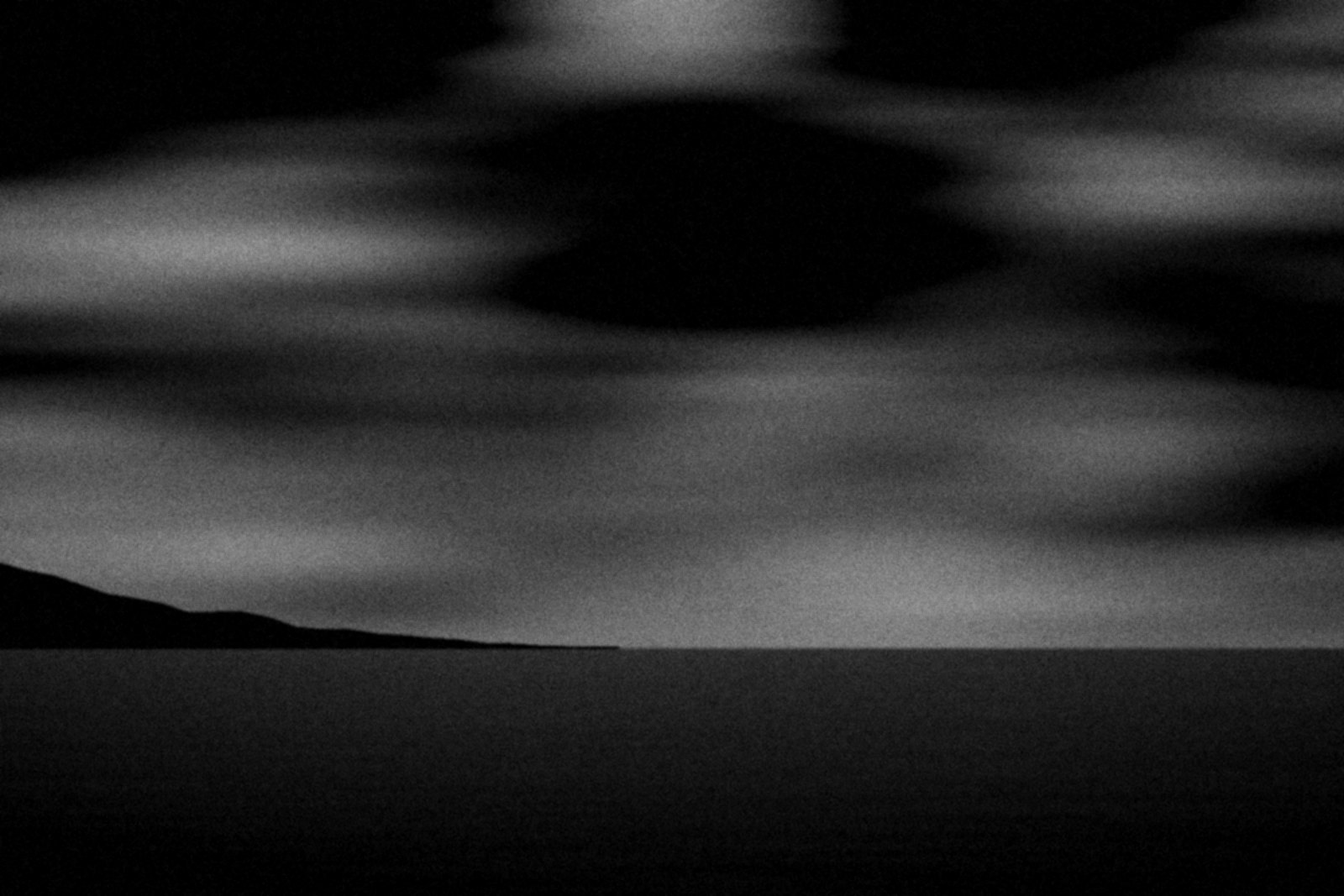
A sky that is white with cloud has no blue to hold back. Orange over an overcast sea costs two stops and changes nothing except the shutter speed, which, to be fair, is sometimes the reason it is there. For a sky with no blue, a graduated grey filter, or simply printing the sky down later, does what colour cannot.
Stacking
A red filter and a ten-stop grey filter together need thirteen stops: a metered 1/125 s becomes a little over a minute, before reciprocity. Two pieces of glass also mean four more surfaces to collect spray. Wipe them, check the corners for vignetting on a wide lens, and keep the eyepiece covered during the exposure; light leaks backwards through a viewfinder far more readily than anyone expects.